Office Hours: Mon.–Fri. 7:30 a.m.–4 p.m.

Power Outages
Being prepared for a power outage is vital for your family’s safety. Here’s how to report an outage, what to do when the power is restored, and how to stay informed. Click here for our outage map.
Image
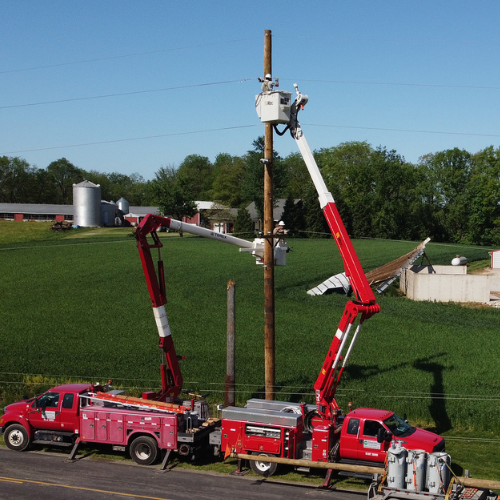
Report an outage and stay informed:
- First, check for blown fuses or tripped circuit breakers (located in a fuse or breaker panel inside your home, building, or garage). If you live in a mobile home, check that the main breaker is in the ON position. Also, you may have a breaker panel outside on your service pole beneath your electric meter.
- To report the outage:
- You can call us at 419-394-4110
- Report directly through our Smart Hub app or online. Tap the “Report Outage” icon. On the “Report Outage” screen, tap the “Report Outage” link. Verify your contact address. Add comments that will assist in the outage restoration. For example, if you hear a loud “bang” from your transformer, let us know. Then click “Submit.”
- Text alerts - our system automatically sends texts to all mobile numbers we have on file. If you are not receiving texts from us, please call the office to verify your account details.
- During large outages, follow us on Facebook and Instagram for updates.
Stay Safe
- Listen to weather updates via battery-powered radio.
- Avoid using candles (fire risk) -- use flashlights instead
- Stay warm. If you don't have an alternate, non-electric heat source, know the locations of the closest warming centers offered by your local EMA.
Stay Indoors and Limit Travel
- Downed lines can be deadly. Assume all downed power lines are live.
- Keep pets and children away from unsafe areas.
Before the Outage: Be Ready
The best time to prepare for a power outage is before one happens. Taking some proactive steps now can significantly reduce stress and ensure your household is ready for anything. Think of it like a safety net: the more you prepare, the more secure you'll feel when an unexpected outage occurs.
Your Kit Should Include:
- Portable Power Bank/s (High-Capacity)
- NOAA Weather Radio (Hand-Crank or Battery-Powered)
- Water (1 gallon per person per day – at least 3 days)
- Ready-to-eat meals, energy bars, canned food, or even freeze-dried options.
- Disposable plates and utensils, and a manual can opener.
- Consider buying a camp stove and fuel that you can use (outdoors only) if you can’t cook on your electric stove.
- Dress in layers to stay warm during winter outages.
- Flashlights (LED) + Extra Batteries
- Smartphone with Emergency Apps Pre-Installed
- Multi-Tool or Swiss Army Knife
- First Aid Kit
- Important Documents (Waterproof Folder or USB Drive)
- Back-Up Communication Device
- Emergency Blankets or Sleeping Bags
- Medications & Personal Hygiene Supplies
- Cash (Small Bills)
- Protective Gear
- Battery-operated sump pump
- Don't forget pet supplies
Prepare Your Home
- Fill bathtubs with water for hygiene needs (if on a well).
- Unplug sensitive electronics.
- Know how to manually open your garage.
- Check backup generators and fuel supply (never run indoors).
Stay Connected
- Download the Midwest Electric SmartHub app and enable outage alerts.
- Follow Midwest on social media for real-time updates during large outages.
- Make sure we have your mobile number on file to receive outage texts from us.
- Write down key emergency contacts.
While the immediate crisis may be over, the period after an outage is crucial for ensuring your safety, assessing any damage, and getting back to normal.
Wait for the All-Clear
- Midwest Electric crews will be working to restore power as safely as possible.
- Stay back from repair areas and equipment.
Reset and Check Appliances
- Gradually plug electronics back in to avoid overloads.
- Check your food and toss anything that may have spoiled.
Inspect for Damage
- Look for water damage, broken pipes, or downed trees.
- Stay clear of downed lines -- report them immediately to Midwest Electric.
Image
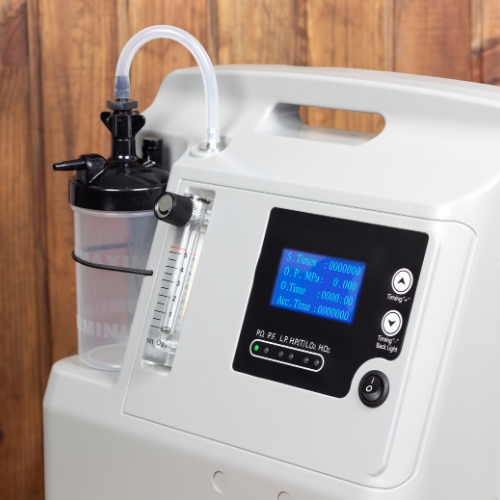
Life Support Equipment
Because we cannot guarantee uninterrupted electric service, we strongly recommend that you have a backup power source and an emergency plan for extended power outages
If you or a member of your household requires in-home life support equipment prescribed by a physician. If you have a backup power source, please follow proper installation procedures to ensure the safety of the public and our line crews.
Please contact your local EMA office to make sure they are aware of your medical needs.
How does Midwest Electric choose which members to restore first?
We restore power as quickly and safely as possible. Our goal is to get power back to as many people as we can, while saving smaller outages for later. First, we fix the substations, then the large three-phase lines, followed by the large single-phase circuits, the smaller tap circuits, and finally, we address individual outages.
Why do Midwest Electric trucks drive past my house without fixing anything?
Service restoration may be delayed if work is required at a nearby location. If we repair your service line before fixing the main lines supplying your area, you still won’t have power. It’s important for our line crews to check all lines before restoring power to avoid any further damage.
Why is my home the only house on the road without power?
There could be several reasons for the power outage. First, check if any fuses or circuit breakers in your home have tripped. Next, tree limbs could have fallen on the power line serving your home, even if they didn't land in your yard. Additionally, the fuses on the transformer that supplies electricity to your home might have tripped. Lastly, if there is a three-phase power line on your road, only one phase may be damaged. If that is the phase that serves your home, you may be without power while your neighbors still have electricity.
Why is there no electricity in some parts of my house?
You might have tripped a circuit breaker, blown a fuse, or have a damaged connector or wire at your service leads. This can result in only 120-volt outlets working, leaving 240-volt appliances like dryers and air conditioners inoperable. If some lights are very bright or dim, avoid using those outlets to prevent damage. Issues may also stem from poor neutral or ground connections at the transformer, pole ground, or meter base, or from failing conductors. If you experience partial service or low voltage, turn off your main breaker and contact us or an electrician.
Why do I sometimes experience brief outages that require resetting appliances?
Outages usually occur when a recloser detects line interference. If the issue is temporary, the line briefly de-energizes and then re-energizes quickly. If it’s prolonged, the line stays de-energized until repairs are made. This equipment prevents permanent damage from issues like a tree on the line and ensures power is restored quickly if the interference is only temporary.
Partial Power
Partial power or "brownouts" are when the lights get really bright in one part of the house and dim in another. Or your lights and appliances work in one part of your home but not in others.
Partial power at a home is usually caused by a problem with the neutral and/or ground connections. This could be a bad connection at the transformer, pole ground, primary neutral conductor, meter base, a failing secondary conductor, problems at the breaker panel, or problems within the home's individual circuits.
The symptoms include dim lights; lights or appliances work in some parts of the home but not in others; and some lights get really bright while others get really dim at times.
Partial power – or “brownouts” or low voltage – for a large number of members could be caused by a transmission problem or a voltage regulator not working correctly. It also occurs when one of the three phases in a three-phase transmission system is not energizing a substation transformer. Then, two of our distribution phases will be low-voltage, which will cause low voltage at the home.
What to do?
If you experience partial service or low voltage, you should turn off your main breaker and call an electrician or us.
Typically, if the low voltage or partial service is affecting everything in the home, you should call Midwest Electric. We will advise you whether the problem is ours or if it’s on your side of the meter.
Blinking Lights
Don’t confuse partial power with “blinking lights.”
“Blinking lights” is a complete, momentary power outage – perhaps just for a second or a few seconds. Sometimes the lights may blink off once, then everything is fine again. Or, the lights may blink on and off a few times. And then after a few blinks, the power may go out entirely.
Blinking lights occur when there is a fault in our electric system, such as a tree or branch contacting a power line. And it’s a sign that our electric system is working as designed.